The technological advancement and the advent of sound preceding World War II largely contributed to the growing number of experimental films. Creators now had the means to experiment with colors, sounds and textures. Experimental film and avant-garde cinema became a method of filmmaking that re-evaluates conventional cinematic narrative forms and explores alternative methods in an attempt to recreate reality in an artificial form.
With the rise of experimental cinema, what constitutes a film’s medium, and essentially it’s meaning, has been heavily debated. This has consequently prompted the development of several sub-theories, notably Dream Medium Essentialism or what Susanne K. Langer refers to it as the ‘the dream mode’ in her book Feeling and Form. Langer reasoned that film had become its own medium through its direct visual portrayal of an artist’s intentions or imaginations, which she refers to as ‘the dream mode’. Her idea regarding an entity, such as film, not having fixed characteristics that circumscribe the creators imagination or intention was largely promoted by film practitioners during the twentieth century because it legitimised cinema as an artform. Before, film had been regarded as only a recorded representation of a written play.
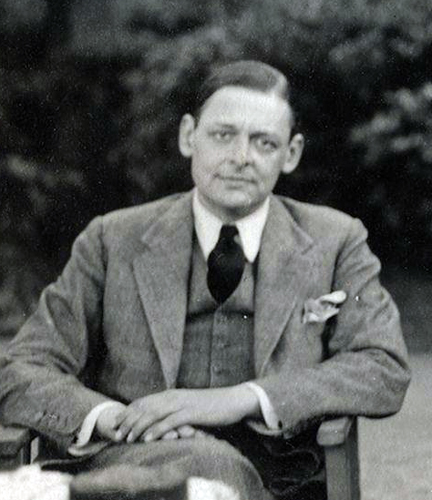
There are recognizable parallels between Deren’s use of powerful personal symbolic imagery presented in her poignant use of objects and actions, and symbolist poetry, particularly in the imagist movement. Imagism was a style that both Ezra Pound and T.S. Eliot prescribed to. T.S. Eliot had a theory of objective correlative, which he used to refer to a set of objects, a situation or a chain of events that center around a particular emotion that a poet or creator feels and hopes to evoke in the reader or viewer. His theory was closely connected with the imagist movement. Similarly symbolist poems were generally attempts to evoke, rather than explicitly describe; the emotion and state of the poet with symbolic imagery. Pound also linked poetic form with emotional affect. He explained in his short essay titled “A Few Don’ts by an Imagiste”, that “an image is that which presents an intellectual and emotional complex in an instant of time,” (Pound 205), which we see as paralleling Deren’s vertical rhetoric.
Avant-garde and experimental cinema, particularly, share some arable medians with that of modern poetry. William Wees, an experimental filmographer, addresses the upcoming genre of ‘poetry-films’ and explains that, “A number of avant-garde film and video makers have created a synthesis of poetry and film that generates associations, connotations and metaphors neither the verbal nor the visual text would produce on its own,” (qtd. in Ieropoulos) rather than linking the the images together through a chronological storyline or set of actions. The viewers associations with the images can extend beyond the creators prism of intention which allows the images and clips in her film to convey deep ideas that expository language could not do alone. Scott MacDonald, a professor of Cinema at Hamilton College, explains that the versatility of filmic techniques used to duplicate an artificial reality can serve as “an instrument of poetry” which “holds a sense of liberation, subversion of reality, a passage into the marvelous world of the subconscious, and nonconformity to the restrictive society that surrounds us,” (MacDonald 106). The creator’s voice, when employing images, is seen as well as heard.
Many experimental artists, such as Deren with her film Meshes of the Afternoon, have extended beyond the denotations and semantics of words to explore the possibility conveying meaning in a film without words. Deren used the cinematic median to allow poetic expression to evoke meaning through images. In the ‘Poetry and Film’ symposium, Deren suggests that words are not necessary in theater when they come from what you see, because it “would be redundant in film if they were used as a further projection from the image. However, if they were brought in on a different level, not issuing from the image which should be complete in itself, but as another dimension relating to it, then it is the two things together that make a poem,” (Deren qtd. Mass). That is where film can lend itself to poetic expression, because with the vehicle of the cinematic median, poetry becomes performative for the eye.
 Poetics Presentation